

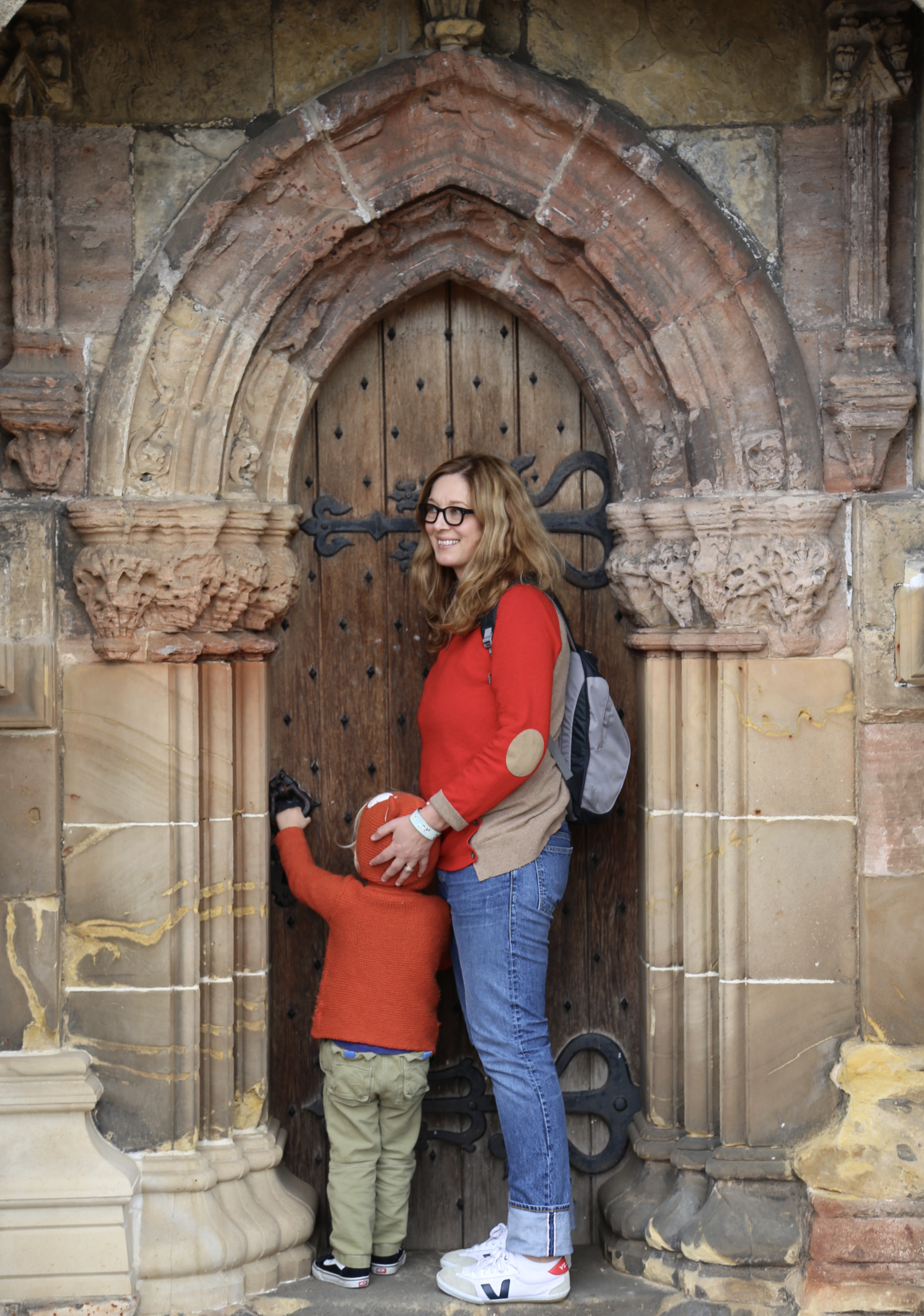
I grew up in Starkville, MS, and I attended Mississippi State University as a John C. Stennis scholar. When I figured out I could graduate in three years, I spent a year doing research for a M.Phil. in medieval literature at the University of Wales, Lampeter. Then I went to Vanderbilt University for an M.A. and Ph.D. in English, focusing on late medieval and early modern literatures. I taught at St. Lawrence University and the University of Cincinnati, then spent nineteen years at the University of South Carolina. Beginning AY 2025-2026, I am the Hale Family Director of Women’s and Gender Studies and Professor of English at Boston College.
I am author of Chaucer’s Visions of Manhood (Palgrave, 2007), co-editor of Medieval Literature: Criticism and Debates (Routledge, 2014; with D. Vance Smith), and editor of Comic Provocations: Exposing the Corpus of Old French Fabliaux (Palgrave, 2006). My articles have appeared in The Chaucer Review, Exemplaria, The Journal of Early Modern Cultural Studies, The Journal of Medieval and Early Modern Studies, Medieval Feminist Forum, New Medieval Literatures, PMLA, Shakespeare Quarterly, Studies in the Age of Chaucer, Studies in English Literature, 1500-1900, and numerous edited collections. I am also co-editor of a special issue of postmedieval: a journal of medieval cultural studies on “Premodern Flesh” 4.4 (2013; with Kathryn Schwarz).
From 2008-2015 I was forum editor and reviews editor of postmedieval: a journal of medieval cultural studies. I have been a member of the MLA’s Chaucer Division Executive Committee (2010-15; Chair, 2014), a member of the New Chaucer Society Program Committee (Portland, 2012), and Co-Chair of the New Chaucer Society Program Committee (Reykjavik, 2014; with Glenn Burger). My work has been supported by fellowships from the Fulbright Commission, the NEH, the Folger Shakespeare Library, IASH at Edinburgh University, and the Forschungskolleg Humanwissenschaften at the Goethe University of Frankfurt. Over my career at USC, I distinguished myself in the classroom: I was the recipient of the departmental teaching award, as well as the Graduate English Association’s award for best performance in the classroom. I have also twice won the William Richey Faculty Mentor Award from the Graduate English Association. In 2014-2015 I held the English Department’s Morrison Professorship and was a Visiting Research Scholar at Vanderbilt University. In 2016, I won the Russell Research Award for Humanities and Social Sciences, the highest award for research at USC.
My last monograph, The Matter of Virtue: Women’s Ethical Action from Chaucer to Shakespeare (University of Pennsylvania Press, 2019), argues that English poets–including Capgrave, Chaucer, Fletcher, Henryson, Lodge, Lydgate, Shakespeare, and Spenser–elaborate a positive account of women’s ethical action. They do so through a poetic reformulation of virtue as material, animate, and performative. Rather than confine women within rigid prescriptive schema, writings under consideration in this study articulate a material conception of virtue that allows women to show strength, dignity, beauty, and constancy, among other qualities. By treating feminine virtues as embodied powers that exert material influence, these poets not only create powerful female characters, they also foster an ethics based on forbearance and endurance rather than governance and domination. This book won the 2023 Jerome E. Singerman Prize, awarded to a meritorious second book (any medieval field) by the Medieval Academy of America.
Together with Glenn Burger, I edited Medieval Affect, Feeling, and Emotion (Cambridge University Press, 2019). This essay collection rethinks how feelings are represented in late Middle English literature (ca. 1375-1501). Across eight chapters and an afterword, it shows that the history of emotions and affect theory are similarly insufficient for investigating the intersection of body and mind featured in late Middle English literatures. And, while medieval studies has generated a rich scholarly literature on “affective piety,” essays in this collection chart an exciting new investigation of feelings in non-religious contexts. From Geoffrey Chaucer to Gavin Douglas, and from practices of witnessing to the adoration of objects: essays in this volume chart the coexistence of emotion and affect in late medieval representations of feeling.
I’m currently completing a monograph, The Boundless Subject of Late Medieval Literature, which argues for the feminist potential of a yielding, receptive, and pliant subjectivity in Chaucer, Langland, the Pearl-poet, Hoccleve, Kempe, and a number of writings about Eleanor Cobham. Recently, I edited a special essay cluster for Studies in the Age of Chaucer 46 (2024) on “Reconsidering the Subject,” and I coedited (with Carissa Harris) a special issue for Exemplaria 36.3 (2024) on “Theorizing Gender, Patriarchy, and Liberation: Imani Perry’s Vexy Thing and Medieval Studies.” I am a member of the Editorial Board for PMLA, and I am one of four editors of Exemplaria: Medieval, Early Modern, Theory. I also write on the relationship between past and present for the ARCADE project at Stanford: http://arcade.stanford.edu/users/holly-crocker
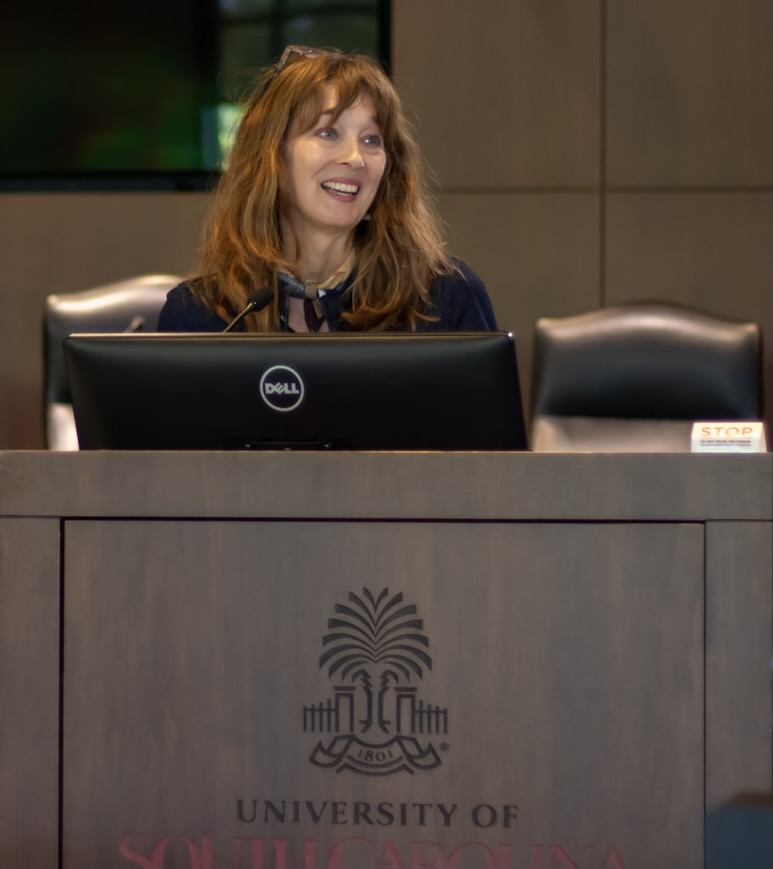
 Holly A. Crocker